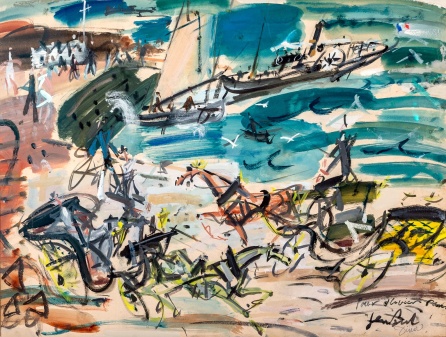
Watercolour and Gouache on Paper
Signed
Size (inches) : 19 (h) x 25 (w)
Size (cm) : 48.26 (h) x 63.5 (w)
Frame Size (inches) : 26.5 (h) x 33 (w)
Frame Size (cm) : 67.31 (h) x 83.82 (w)
View on background colour: Dark Graphite
string(6) "string"
string(1894) "
This dynamic and vividly expressive painting by Eugène Paul, titled Moulin Rouge, captures the energy and atmosphere of Paris in the mid-20th century. With bold brushstrokes, rhythmic movement, and an interplay of abstracted forms, Paul evokes the bustling spirit of Montmartre - the Parisian district long associated with art, nightlife, and the famous cabaret, the Moulin Rouge.
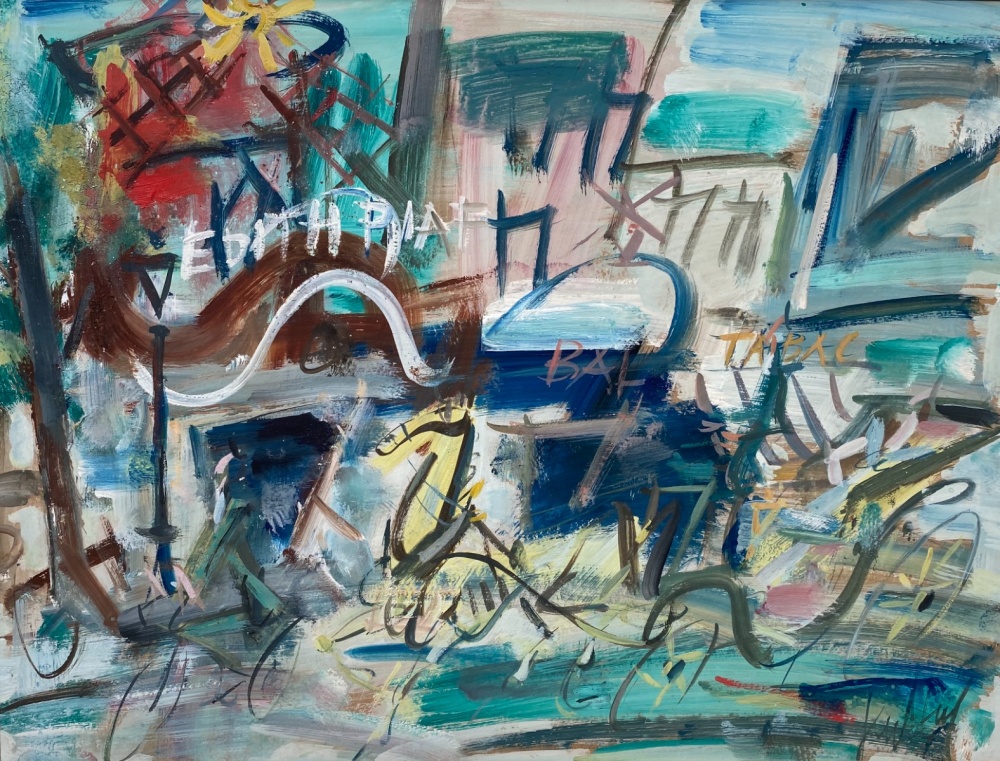
At the center of the composition, layered text such as Édith Piaf and Tabac emerge from the energetic swirl of colour, grounding the work in the cultural memory of Paris. These references speak to the sounds and scenes of the city: Piaf, the legendary French chanteuse, whose voice embodied the soul of Paris, and the familiar corner cafés and tobacco shops that punctuated everyday life. The work is less a literal depiction of the Moulin Rouge than an atmospheric homage to the sights, sounds, and emotions that defined Parisian street life.
Paul, often associated with the School of Paris, was a French painter and engraver whose art reflects the vibrant cultural crossroads of his era. Born and raised in Paris, he was immersed in the artistic ferment of Montmartre, drawing inspiration from its cafés, dance halls, and colorful characters. His work often merges figuration and abstraction, echoing the influence of Cubism and Expressionism while retaining a deeply personal lyricism. Paul’s use of expressive gesture and layered surfaces mirrors the improvisational qualities of jazz and chanson, both central to Parisian identity in the early 20th century.
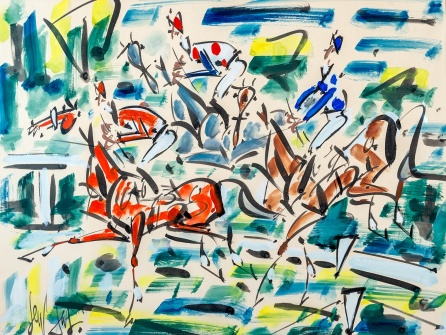
In Moulin Rouge, Paul translates lived experience into visual rhythm: the streetlamps, signage, horses, and figures dissolve into movement, as if glimpsed in passing on a lively evening. The result is a vibrant tableau of memory and sensation, paying homage to a Paris that was at once everyday and iconic, fleeting and eternal.
"
This dynamic and vividly expressive painting by Eugène Paul, titled Moulin Rouge, captures the energy and atmosphere of Paris in the mid-20th century. With bold brushstrokes, rhythmic movement, and an interplay of abstracted forms, Paul evokes the bustling spirit of Montmartre - the Parisian district long associated with art, nightlife, and the famous cabaret, the Moulin Rouge.
At the center of the composition, layered text such as Édith Piaf and Tabac emerge from the energetic swirl of colour, grounding the work in the cultural memory of Paris. These references speak to the sounds and scenes of the city: Piaf, the legendary French chanteuse, whose voice embodied the soul of Paris, and the familiar corner cafés and tobacco shops that punctuated everyday life. The work is less a literal depiction of the Moulin Rouge than an atmospheric homage to the sights, sounds, and emotions that defined Parisian street life.
Paul, often associated with the School of Paris, was a French painter and engraver whose art reflects the vibrant cultural crossroads of his era. Born and raised in Paris, he was immersed in the artistic ferment of Montmartre, drawing inspiration from its cafés, dance halls, and colorful characters. His work often merges figuration and abstraction, echoing the influence of Cubism and Expressionism while retaining a deeply personal lyricism. Paul’s use of expressive gesture and layered surfaces mirrors the improvisational qualities of jazz and chanson, both central to Parisian identity in the early 20th century.
In Moulin Rouge, Paul translates lived experience into visual rhythm: the streetlamps, signage, horses, and figures dissolve into movement, as if glimpsed in passing on a lively evening. The result is a vibrant tableau of memory and sensation, paying homage to a Paris that was at once everyday and iconic, fleeting and eternal.