Summer Afternoon, Provence
Signed
Size (inches) : 23 (h) x 28 (w)
Size (cm) : 58.4 (h) x 71.1 (w)
Frame Size (inches) : 33 (h) x 38 (w)
Frame Size (cm) : 83.82 (h) x 96.52 (w)
View on background colour: Dark Graphite
Summer Afternoon, Provence
string(6) "string"
string(2042) "
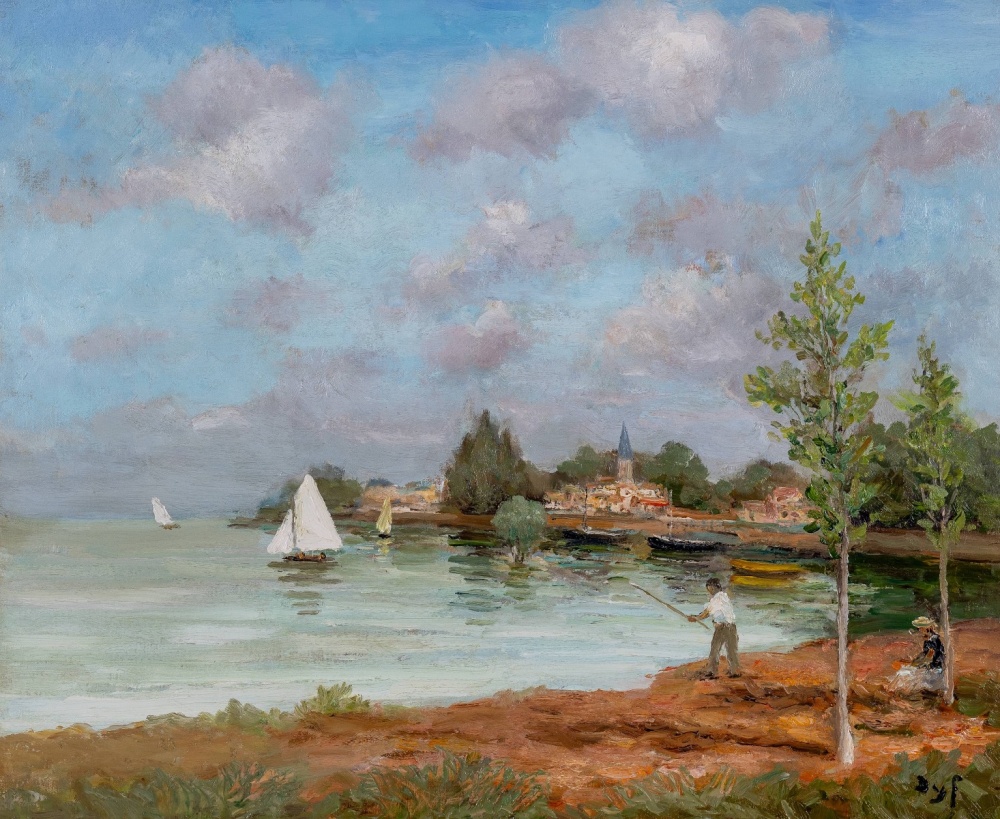
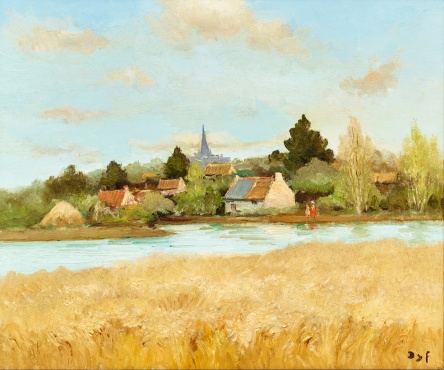
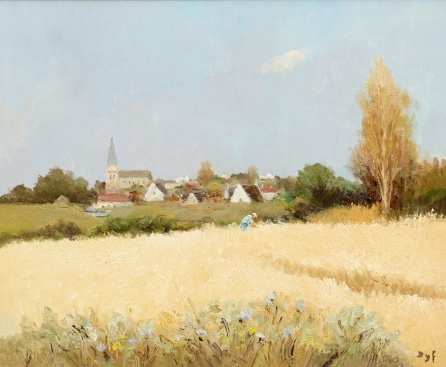
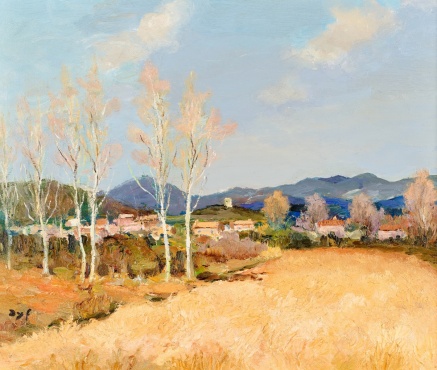
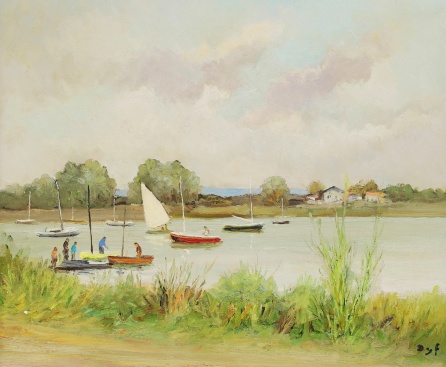
Summer Afternoon captures a tranquil riverside or coastal village scene bathed in soft light, with the relaxed rhythms of summer rendered in Dyf’s fluid and expressive brushwork. The composition unfolds horizontally across the canvas: the calm, shimmering water dominates the left and middle, while the right side features two figures; a man fishing near the edge and a woman seated in the shade.
Several sailboats dot the water, their white sails catching the breeze and adding graceful vertical accents. Reflections ripple gently below them. Beyond the water, a village shoreline emerges, with red-roofed buildings, trees, and a distinct church steeple piercing the skyline, drawing the eye deeper into the scene. The sky - wide and expansive - features large, luminous clouds drifting against a blue backdrop, suggesting a warm afternoon with mild wind.
Foreground trees frame the scene on the right, painted with brisk dabs of green and ochre. The ground is a warm terracotta and brown, textured to evoke dry summer soil and grasses. Dyf's brushwork is loose yet precise. The paint is applied in confident, dappled strokes, particularly in the foliage and sky. His Impressionist roots are especially clear in the broken colour used for reflections in the water. Cool blues and greens dominate the water and sky, harmonizing with the warmer earth tones and sunlit buildings. The contrast is subtle but effective; evoking heat and breeze simultaneously. Summer Afternoon belongs to Dyf’s celebrated genre of rural and coastal scenes, painted directly from life or from memory of quiet regions in southern France. It continues the French tradition of portraying idyllic leisure, reminiscent of Boudin, Sisley, and even Caillebotte in its calm observation of everyday serenity.
Rather than dramatizing the landscape, Dyf gently celebrates its humble pleasures; sailing, fishing, resting in nature. His works resist modern abstraction in favor of capturing fleeting moods: stillness, warmth, breeze, and community.
"
Summer Afternoon captures a tranquil riverside or coastal village scene bathed in soft light, with the relaxed rhythms of summer rendered in Dyf’s fluid and expressive brushwork. The composition unfolds horizontally across the canvas: the calm, shimmering water dominates the left and middle, while the right side features two figures; a man fishing near the edge and a woman seated in the shade.
Several sailboats dot the water, their white sails catching the breeze and adding graceful vertical accents. Reflections ripple gently below them. Beyond the water, a village shoreline emerges, with red-roofed buildings, trees, and a distinct church steeple piercing the skyline, drawing the eye deeper into the scene. The sky - wide and expansive - features large, luminous clouds drifting against a blue backdrop, suggesting a warm afternoon with mild wind.
Foreground trees frame the scene on the right, painted with brisk dabs of green and ochre. The ground is a warm terracotta and brown, textured to evoke dry summer soil and grasses. Dyf's brushwork is loose yet precise. The paint is applied in confident, dappled strokes, particularly in the foliage and sky. His Impressionist roots are especially clear in the broken colour used for reflections in the water. Cool blues and greens dominate the water and sky, harmonizing with the warmer earth tones and sunlit buildings. The contrast is subtle but effective; evoking heat and breeze simultaneously. Summer Afternoon belongs to Dyf’s celebrated genre of rural and coastal scenes, painted directly from life or from memory of quiet regions in southern France. It continues the French tradition of portraying idyllic leisure, reminiscent of Boudin, Sisley, and even Caillebotte in its calm observation of everyday serenity.
Rather than dramatizing the landscape, Dyf gently celebrates its humble pleasures; sailing, fishing, resting in nature. His works resist modern abstraction in favor of capturing fleeting moods: stillness, warmth, breeze, and community.