Signed
Size (inches) : 23 (h) x 28 (w)
Size (cm) : 58.42 (h) x 71.12 (w)
Frame Size (inches) : 33 (h) x 38 (w)
Frame Size (cm) : 83.82 (h) x 96.52 (w)
View on background colour: Dark Graphite
string(6) "string"
string(2226) "
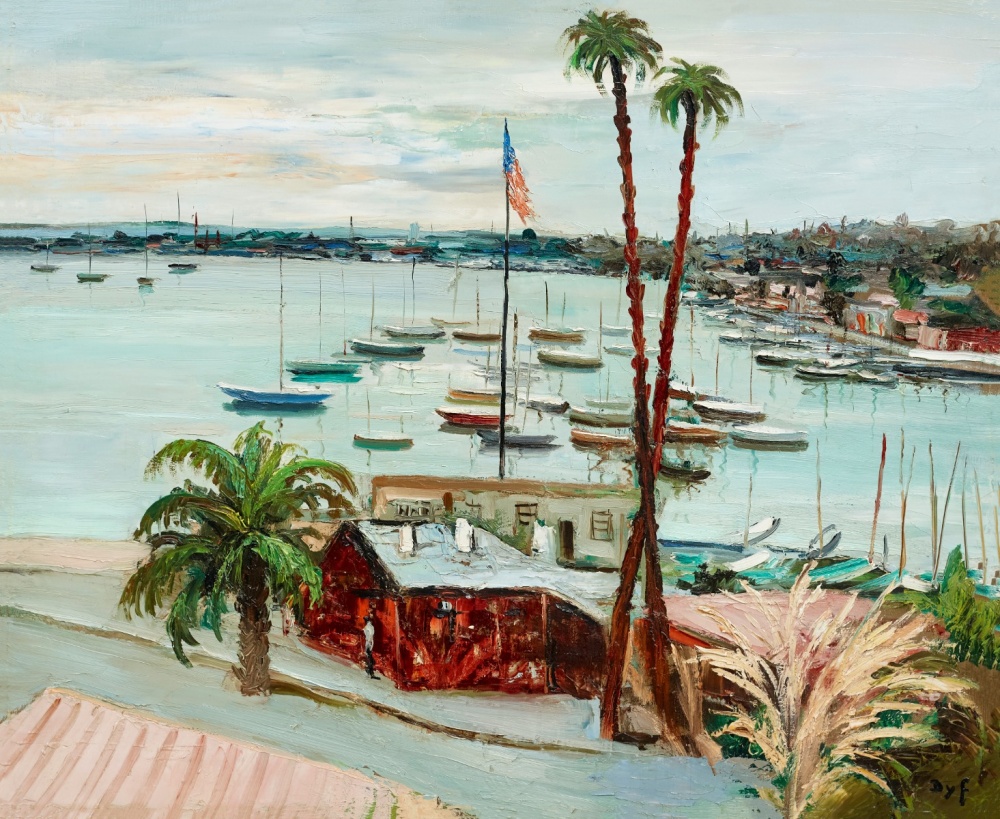
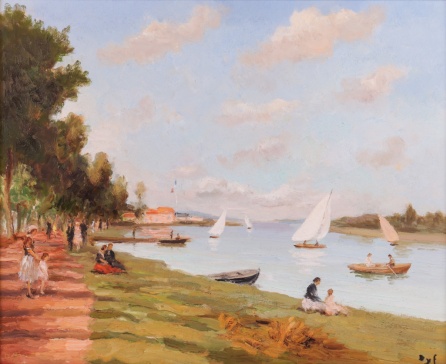
In Club Américain, Antibes, Marcel Dyf captures a rare and vibrant coastal scene from the glamorous Riviera town of Antibes. The composition is a feast of rhythm and color: moored sailboats line the tranquil harbour in neat rows, their hulls creating abstract patterns across the reflective turquoise waters of the Mediterranean. Two tall palm trees—lean and luminous—frame the centre of the canvas, visually anchoring the foreground while drawing the eye upward.
At the base of the composition lies a vivid red boathouse or beach club, most likely the Club Américain referenced in the title. It is set against a pale promenade lined with palms, flags, and pathways, creating a classic juxtaposition between human architecture and nature’s grandeur. The gently undulating coastline in the distance is flecked with villas, boats, and trees—suggesting the quiet affluence of this beloved stretch of the Côte d’Azur.
The American flag, caught in the breeze, adds a narrative note: a symbol of transatlantic leisure culture that defined much of the Riviera's golden age in the mid-20th century.
Dyf deploys his signature sun-bleached palette: soft aqua blues, warm ochres, terracottas, and greens, punctuated by bold vermilions and navy. The textured impasto and brisk, impressionistic strokes convey a scene observed quickly, but with immense confidence—emphasising the play of light on water and structure. Balanced yet informal, the perspective offers a high vantage point, possibly from a balcony or elevated walkway, a common device Dyf used to create spatial depth.
Antibes, located between Cannes and Nice, was a cultural and social hub during the postwar years. Once a sleepy fishing village, it became a favoured retreat for American expatriates, artists, and the European elite—home to Picasso for a time, as well as writers like F. Scott Fitzgerald.
The Club Américain was a known hotspot in mid-century Antibes, attracting both locals and visiting Americans with its seaside charm and informal glamour. This work not only reflects a location, it preserves an era: the golden age of Antibes, where art, affluence, and azure waters came together in unforgettable harmony.
"
In Club Américain, Antibes, Marcel Dyf captures a rare and vibrant coastal scene from the glamorous Riviera town of Antibes. The composition is a feast of rhythm and color: moored sailboats line the tranquil harbour in neat rows, their hulls creating abstract patterns across the reflective turquoise waters of the Mediterranean. Two tall palm trees—lean and luminous—frame the centre of the canvas, visually anchoring the foreground while drawing the eye upward.
At the base of the composition lies a vivid red boathouse or beach club, most likely the Club Américain referenced in the title. It is set against a pale promenade lined with palms, flags, and pathways, creating a classic juxtaposition between human architecture and nature’s grandeur. The gently undulating coastline in the distance is flecked with villas, boats, and trees—suggesting the quiet affluence of this beloved stretch of the Côte d’Azur.
The American flag, caught in the breeze, adds a narrative note: a symbol of transatlantic leisure culture that defined much of the Riviera's golden age in the mid-20th century.
Dyf deploys his signature sun-bleached palette: soft aqua blues, warm ochres, terracottas, and greens, punctuated by bold vermilions and navy. The textured impasto and brisk, impressionistic strokes convey a scene observed quickly, but with immense confidence—emphasising the play of light on water and structure. Balanced yet informal, the perspective offers a high vantage point, possibly from a balcony or elevated walkway, a common device Dyf used to create spatial depth.
Antibes, located between Cannes and Nice, was a cultural and social hub during the postwar years. Once a sleepy fishing village, it became a favoured retreat for American expatriates, artists, and the European elite—home to Picasso for a time, as well as writers like F. Scott Fitzgerald.
The Club Américain was a known hotspot in mid-century Antibes, attracting both locals and visiting Americans with its seaside charm and informal glamour. This work not only reflects a location, it preserves an era: the golden age of Antibes, where art, affluence, and azure waters came together in unforgettable harmony.