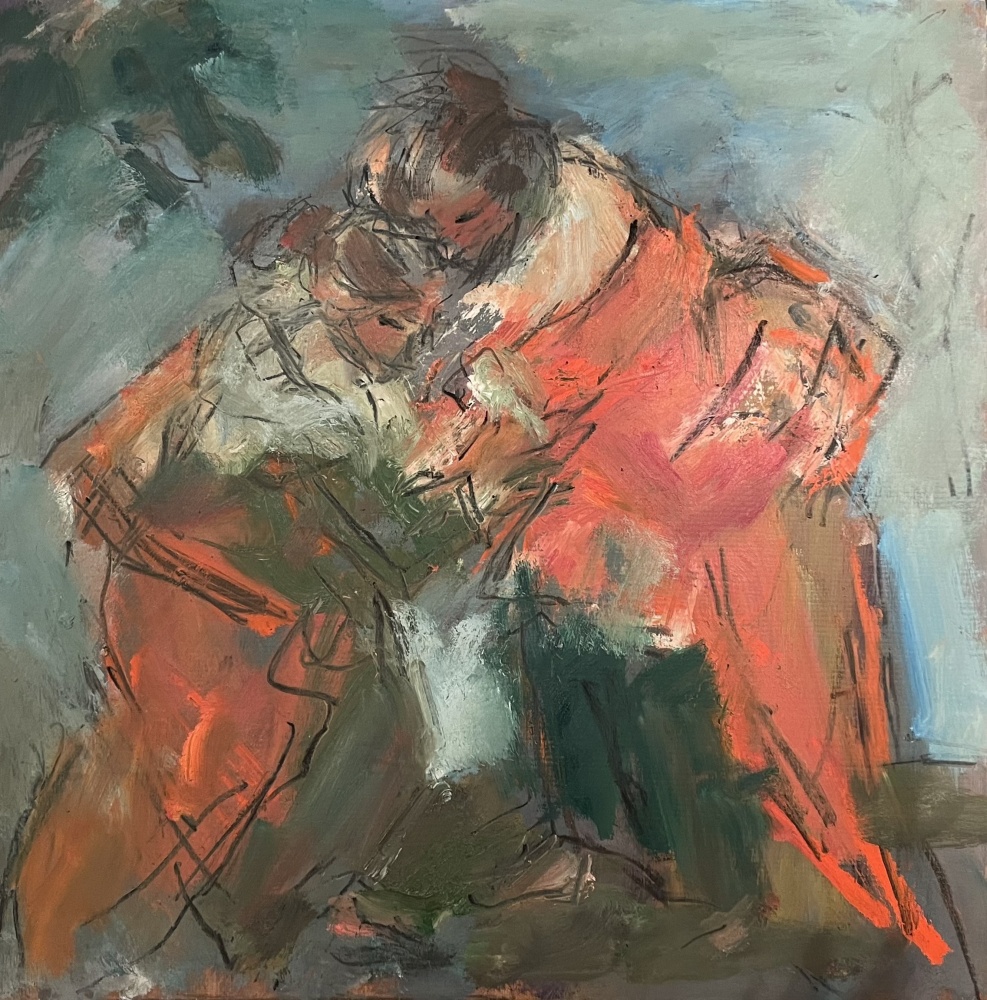
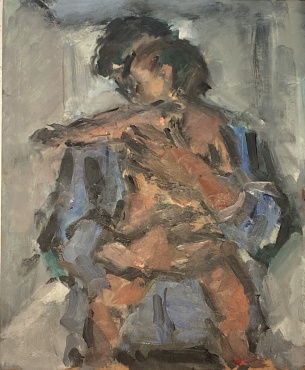
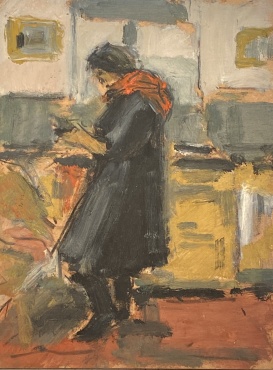
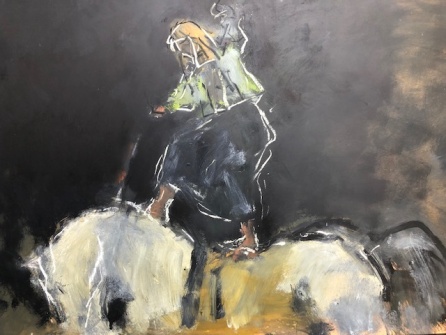
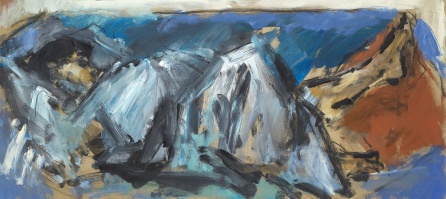
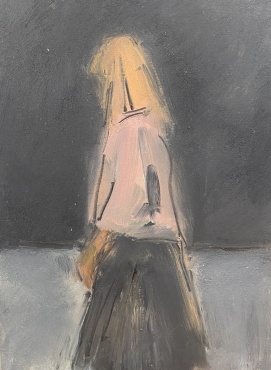
In After Tintoretto’s Visitation, Venice, Ghislaine Howard reimagines the emotional intensity and spiritual drama of the Renaissance master through a bold contemporary language of colour and gesture. Two intertwined figures dominate the composition, their forms merging within sweeping passages of luminous coral, deep green, and smoky grey. Howard’s energetic brushwork and expressive line create a powerful sense of movement and intimacy, echoing the dynamic theatricality associated with Tintoretto’s paintings.
Rather than recreating the original scene literally, Howard distils its emotional essence; tenderness, reverence, and human connection. The figures appear suspended within an atmospheric, undefined space, their closeness emphasised through layered textures and fluid contours. Vibrant flashes of pink and orange pulse across the surface, lending the work both warmth and urgency. Through this instinctive and painterly interpretation, Howard bridges the historical and the contemporary, transforming a biblical encounter into a deeply human meditation on compassion, presence, and emotional exchange.
"
In After Tintoretto’s Visitation, Venice, Ghislaine Howard reimagines the emotional intensity and spiritual drama of the Renaissance master through a bold contemporary language of colour and gesture. Two intertwined figures dominate the composition, their forms merging within sweeping passages of luminous coral, deep green, and smoky grey. Howard’s energetic brushwork and expressive line create a powerful sense of movement and intimacy, echoing the dynamic theatricality associated with Tintoretto’s paintings.
Rather than recreating the original scene literally, Howard distils its emotional essence; tenderness, reverence, and human connection. The figures appear suspended within an atmospheric, undefined space, their closeness emphasised through layered textures and fluid contours. Vibrant flashes of pink and orange pulse across the surface, lending the work both warmth and urgency. Through this instinctive and painterly interpretation, Howard bridges the historical and the contemporary, transforming a biblical encounter into a deeply human meditation on compassion, presence, and emotional exchange.